
 Available in GB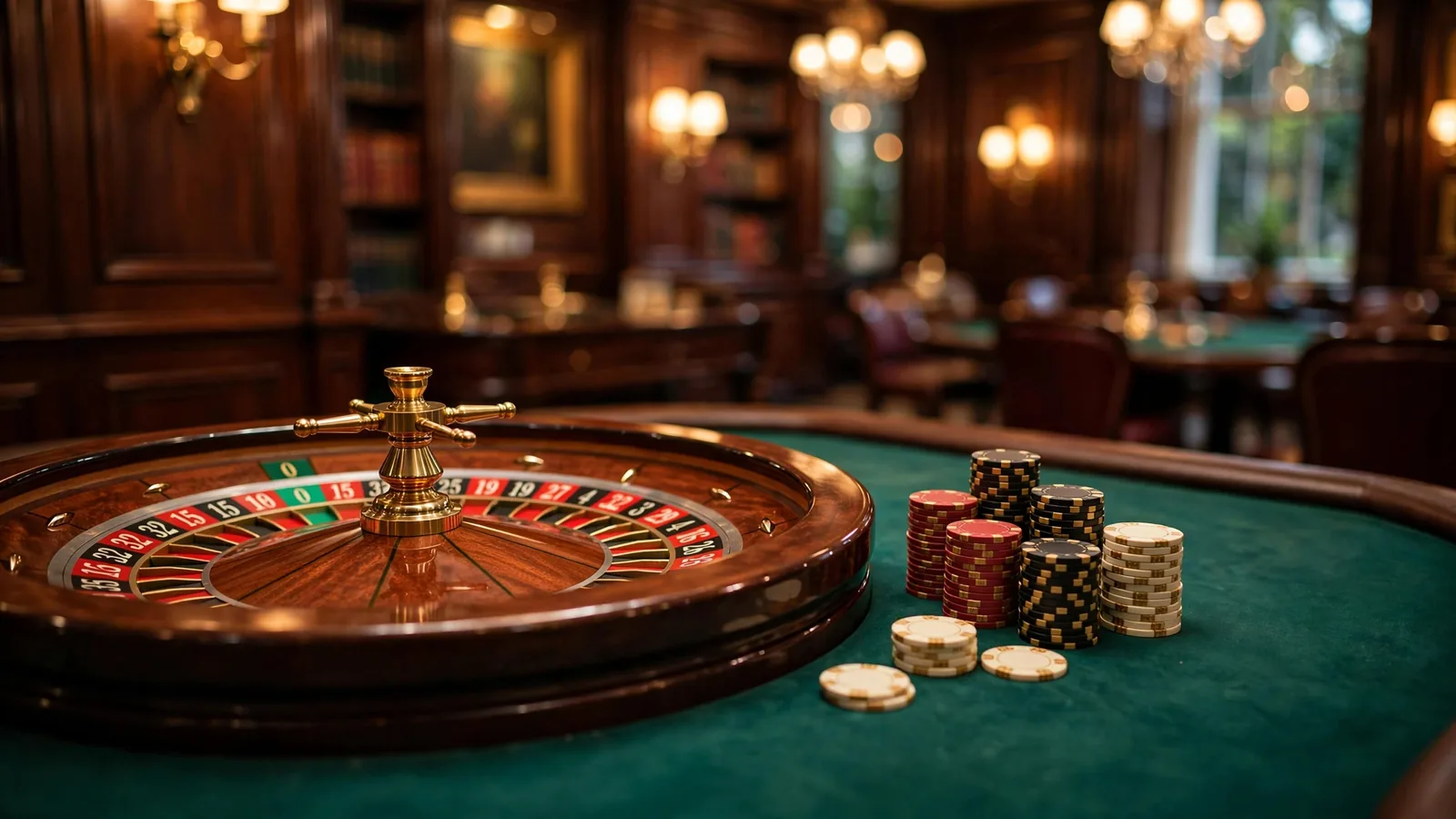
- What a UK Roulette Casino Is Expected to Show
- The European Wheel: Thirty-Seven Pockets, One Zero
- Choosing a Table Without Mistaking Presentation for Odds
- Placing Bets and Reading the Payouts
- Single-Zero Tables and the Cost of a Spin
- The Wheel on Screen: Randomised Spins and Real Ball Drops
- How the Roulette Table Layout Organises the Bets
- Roulette Demos, RNG Spins and Lightning Variations
- Live Dealer Roulette and the UK Safeguards Around It
- European, American and French Roulette: Different Edges
A guide to UK operator checks, roulette layouts, payouts, wheel formats and the safeguards attached to online play.
What a UK Roulette Casino Is Expected to Show
A casino’s offer is more than the name of a roulette game in a lobby. For anyone comparing European roulette casinos in the UK, the useful evidence is in the information attached to the game and the conditions governing the account: who operates the site, what the table rules say, how bonus funds are treated and where the safeguards are explained. A polished homepage can make these details look incidental. They are not.
For British customers, the first distinction is legal, not decorative. A remote operator taking part in the British market must hold the relevant UK Gambling Commission licence, wherever the business is based. A platform without a valid UKGC licence cannot legally offer real-money roulette to British residents. The licence should be verifiable on the Commission’s public register before money is deposited; a badge in a footer is a claim, not the register itself. The difference matters because the licence brings the operator within the country’s regulatory system and its obligations to customers.
A well-presented casino should make its roulette catalogue legible. Game names should lead to rules and table information rather than leaving the player to infer conditions from a thumbnail or a promotional banner. Where return-to-player information is provided for a roulette game, it should be accessible without a hunt through unrelated pages. This is not a request for grand claims about favourable odds. It is a basic test of whether the operator treats game information as part of the service rather than as small print.
The same applies to bonuses. A headline offer says little about whether roulette play qualifies, how much it contributes to wagering requirements, whether live and software-generated games are treated differently, or which tables are excluded. Those conditions should be available before an offer is accepted. Roulette’s contribution varies by operator; one specialist review describes live roulette as counting at 10% or 20%, while RNG roulette may count at 100%. Such figures are a prompt to inspect the specific terms, not a promise that every casino follows the same schedule.
Casino Games in the UK: Slots, Live Games and More
A specialist review also reports that, since January 2026, UK rules cap bonus wagering at a maximum of 10x for licensed operators. Because bonus conditions and regulatory explanations can be presented in compressed or promotional language, the operator’s own current terms remain the place to establish what applies to a particular offer. Any mismatch between a banner and its full conditions deserves attention. A bonus is a contract with extra clauses, not a gift without an accounting department.
Account controls belong in the same comparison. UKGC-licensed operators must prompt new customers to set a financial limit before their first deposit and provide accessible account-level controls. They must also offer deposit and loss limits, session reminders, reality checks, cool-off periods and GamStop self-exclusion. Age must be verified before a customer is allowed to deposit. These measures are not optional signs of a considerate brand; they are part of the regulated framework around online gambling in Britain.
Payment and redress information should be equally plain. UKGC licensees cannot accept credit cards for gambling, including payments routed through a wallet that permits credit-card funds to be used for gambling. The terms should explain how deposits and withdrawals work without implying that every payment method is available for every transaction. The site should also identify its internal complaints process and provide access to an approved Alternative Dispute Resolution service. If those routes are hidden, the problem is already one of transparency.
Names such as “VIP” can suggest a separate tier of service, but the label itself establishes nothing about the game’s conditions or the treatment of an account. European VIP roulette should still come with accessible rules, RTP information where published, and clear bonus and account terms. Nor should a casino’s use of roulette imagery be confused with a roulette table: roulette-branded slots remain slots, with different rules and regulatory controls.
The sound comparison is therefore not a ranking assembled from attractive slogans. It is a check of what the operator discloses, whether the information is consistent across the game page and the terms, and whether the site’s legal and customer-protection obligations are visible. The wheel may provide the spectacle. The paperwork tells a quieter story.
A European roulette wheel features thirty-seven pockets: numbers 1 to 36 and a single green zero.
The European Wheel: Thirty-Seven Pockets, One Zero
A European roulette wheel is built around a spare-looking green pocket and a ring of numbered ones. There are thirty-seven pockets altogether: numbers 1 to 36, plus a single zero. The numbers are not arranged in numerical order around the wheel. Their sequence is part of the physical design, while the green zero sits among the numbered pockets as its own distinct result.
That is the wheel’s essential vocabulary. A spin ends when the ball settles into one pocket, and the winning result is the number or zero shown there. The table beside the wheel translates those outcomes into places where wagers can be made, but the wheel itself has a simpler task: it produces one result from its thirty-seven pockets.
The distinction matters because roulette’s appearance can make the game seem more elaborate than its central mechanism. Red and black, odd and even, high and low: these are ways of grouping numbers on the table, not extra spaces on the wheel. The zero belongs to none of those ordinary groupings. It is not red or black, odd or even, high or low. It has its own pocket and interrupts the neat categories that otherwise divide the numbered field.
Online Casino Tournaments in the UK: Rules and Prizes
The wheel is circular, but its logic is not a procession from one to thirty-six. A ball travels around the rim as the wheel turns in the opposite direction, then loses speed and drops among the pockets. Small separators between pockets help guide it towards a resting place. The movement is visible; the eventual result is not knowable from the appearance of the spin. A ball may circle for a while, bounce, and settle. The ceremony offers suspense, not a clue.
That blend of spectacle and arithmetic has helped roulette endure. The wheel gives chance a visible stage: a moving ball, a numbered destination, a brief interval in which attention fixes on motion. Yet the physical drama does not alter the number of possible pockets. Whether a spin is watched at a table or represented on a screen, European roulette is defined by the same single-zero structure when it follows this format.
The green pocket is easy to treat as an exception, because it does not fit the colour and number groups printed around it. But it is not an accidental gap in the design. It is one of the thirty-seven outcomes. A result of zero is as much a completed spin as a result bearing any other number; the wheel has not failed to choose, nor has it landed between results. The pocket is the result.
This is also why a European wheel cannot be understood simply by counting the numbered spaces. There are thirty-six numbered pockets, but the total is thirty-seven because zero must be counted too. The phrase “single zero” describes the wheel’s defining feature, not a decorative marking. It names a real outcome with a place of its own.
European Roulette
Features a single zero and a house edge of 2.70%.
American Roulette
Includes a double zero, increasing the house edge to 5.26%.
French Roulette
Uses a single zero and may include rules like La Partage to lower the house edge.
The figures also explain why the wheel and the table should not be confused. The table is an organised surface for recording choices; the wheel is the device that generates the outcome. A printed grid may make numbers look orderly and adjacent, while the wheel distributes them around a circular track. Their functions meet at the spin, but they are not two versions of the same object. One offers positions for wagers; the other supplies the pocket in which the ball comes to rest.
In a European roulette game, the house edge is 2.70%. That percentage belongs to the game’s mathematical structure, rather than to the drama of any individual spin. A result can feel startling or inevitable once it appears, but neither feeling changes the wheel’s composition. The zero is always part of the field of possible outcomes, even when attention has narrowed to a run of numbered results.
For anyone encountering an online European roulette game, the same definition applies: thirty-six numbered pockets, one zero, and a ball that comes to rest in one of them. Screen graphics may stylise the wheel, and a live stream may show a physical one, but the term “European” refers here to the single-zero arrangement. It is a compact design, almost austere. Thirty-seven destinations, no explanation from the ball.
Choosing a Table Without Mistaking Presentation for Odds
A European roulette table can be dressed as a velvet room, a neon studio or a spare digital grid. None of those choices changes the information that matters. When comparing tables, the useful questions concern what the operator discloses about that particular game, how its terms are presented and whether the safeguards around the account are clear. A polished interface is not evidence of better odds.
The first check is whether the table’s rules and return information are accessible before play. RTP, or return to player, should be findable rather than buried behind promotional language or an unexplained information icon. It is a statistical description, not a forecast of what any individual session will return. A label that says “European” is not a substitute for checking the table’s own information: the name identifies a format, while the published details tell players how that offering is represented.
Online casinos without ID in the UK: what it means
Promotional copy deserves the same cool attention. A “best European roulette casino” claim may describe an editorial preference, a bonus or simply the operator’s own confidence in its lobby. It does not establish an advantage at the table. A bonus can have separate conditions governing eligible games and game weighting; those terms should be legible before bonus funds are accepted. If a promotion makes roulette sound like a route to easier returns, the fine print is doing the more serious talking.
Check the operator behind the table
In Great Britain, the UK Gambling Commission (UKGC) is the regulator for online casino activity. A company offering real-money gambling to British customers must hold the relevant UKGC operating licence; an offshore licence alone does not authorise it to serve that market. The distinction is practical, not decorative. The UKGC public register lets a person confirm whether the operator named on the site holds a current licence. That check belongs before depositing, not after a dispute.
A table page can make this information easy to overlook, particularly when the route from game lobby to account is slicker than the route to the terms. The operator’s identity, licence details and complaint process should be accessible without guesswork. UKGC licensees must provide an internal complaints process and access to an approved Alternative Dispute Resolution service. These are not qualities of the wheel; they are part of the framework around the transaction.
Account controls offer another measure of how seriously the operator treats play. Remote operators must prompt new customers to set a financial limit before the first deposit and provide accessible account-level controls. UKGC-licensed casinos must also offer responsible gambling tools, including self-exclusion. For live casino services, required protections include deposit and loss limits, session reminders, reality checks, cool-off periods and GamStop self-exclusion. Age must be verified before a customer can deposit. A page that celebrates atmosphere while making these controls difficult to find has its priorities on display.
Online Bingo UK: Rooms, Slots and How Play Works
Presentation is not protection
A free online roulette demo may help someone become familiar with a screen, but it cannot establish how a real-money account is regulated or what bonus terms apply. Nor should roulette be mistaken for a slot because both appear in the same casino lobby: the category label matters less than the rules and conditions attached to the specific game. “European roulette slot” is often just a loose way of describing a roulette game online; the table’s published information should settle what is actually being offered.
The same caution applies to fast animations, dealer patter and elaborate graphics. They shape the experience, not the chance attached to an outcome. A sound comparison starts with verifiable disclosures: table rules, accessible RTP information, the operator’s UKGC status, clear bonus conditions and visible account protections. Everything else is staging. The lights are optional.
Placing Bets and Reading the Payouts
A roulette wager begins with a choice: back one number, a small group of numbers, or a broader outcome such as red or black. The payout reflects the kind of result selected. A narrower selection pays more if it wins; a wider one pays less. That relationship is the useful starting point for anyone learning how to play European roulette, whether the game is being tried in a demo or played for real money.
A straight-up bet is placed on one number. If that number wins, the payout is 35:1. The same quoted payout applies to a straight-up bet on European and American roulette. It is a large return relative to the stake, but the wager depends on one precise result. The size of the payout should not be mistaken for a sign that the result is likely.
A split bet covers two adjacent numbers and pays 17:1. It trades the single-number focus for a slightly wider selection, with a lower payout in return. A street bet covers a horizontal row of three numbers and pays 11:1. These bets are examples of how roulette assigns different rewards to selections of different sizes. The sequence is simple; the result is not made more predictable by choosing a narrower or broader group.
Payout Examples
Example: 35:1 × £1 = £35 winnings.
Outside bets cover broad categories rather than particular numbers. Red or black, even or odd, and high or low each pay 1:1. Their appeal is easy to understand: the selection encompasses many possible results, so the payout is lower than for a bet on one number. But “even money” describes the payout, not a guarantee that the wager will succeed. Roulette retains its capacity to refuse a tidy bargain.
When reading European roulette payouts, the ratio refers to the winnings offered in relation to the stake. The table’s displayed rules should also make clear how the original stake is treated when a bet wins, so the total amount returned is not confused with the winnings alone. A payout table is more useful when read before chips are placed than after the result has appeared.
For a first session, the practical sequence is modest: identify the bet area, choose the selection, place the stake, then check that the wager is registered before betting closes. On a digital table, the interface may show the selected bet and its payout; on a physical-style layout, the chip position signals what has been covered. The important distinction is between the size of the area selected and the return attached to it. A chip on one number is not the same wager as a chip on a row or on an outside category.
The same basic bet types and quoted payouts apply whether a European table is presented as a standard game or as a more polished VIP room. Presentation can change the atmosphere, but it does not turn a straight-up bet into a broader one. For anyone choosing to play European roulette online in the UK, the payout panel is therefore part of the rules of the wager, not decoration. Read the selection and the return together. A number alone tells only half the story.
Live Dream Catcher Casino UK: Game Guide
Single-Zero Tables and the Cost of a Spin
On a European roulette table, the zero is not merely another place for the ball to stop. It is the pocket that gives the house its mathematical advantage. The wheel’s single-zero format carries a house edge of 2.70%, a figure that applies across the standard betting options. A wager may look more or less exposed depending on its shape, but changing from an inside bet to an outside bet does not remove that underlying cost.
The distinction matters because outside bets can feel reassuring. Red or black, odd or even, high or low: these choices cover broad groups of numbers and tend to produce more frequent wins than a wager on one number. Yet their apparent breadth does not change the role of zero. It sits outside those ordinary groupings, so a spin landing there defeats the usual even-money bet. The table can offer a generous spread of betting options; the arithmetic remains less generous.
That is the quiet work of the green pocket. It interrupts the symmetry suggested by the betting areas and tips the balance towards the house. A player choosing a European roulette single-zero table is therefore not choosing a game without an edge, but one whose edge is set by a particular arrangement of outcomes. The layout makes the choices visible. It does not make them equal.
La Partage Rule
Under the La Partage rule, if the ball lands on zero, an even-money bettor receives half of their original stake back, reducing the house edge on those specific bets to 1.35%.
La Partage changes what happens to an even-money bet when the ball lands on zero. Rather than losing the whole stake, the player receives half of it back. Under that rule, the house edge on those bets falls to 1.35%. The concession applies to even-money wagers, not as a general discount across every betting position. A table’s rules matter as much as its design.
This is a small adjustment with a clear mathematical consequence. La Partage does not turn a losing spin into a winning one; it limits the loss on that particular result. The zero still has a cost, but less of one for the affected wager. In a game organised around repeated chances, reducing that cost can matter more than a table’s polished graphics or dramatic soundtrack. The wheel is indifferent to both.
The practical comparison is therefore not simply between tables that look alike. The rules attached to zero should be read alongside the stated house edge, with attention to which wagers receive the La Partage treatment. If the rule is absent, the standard European edge remains 2.70%; where La Partage applies to even-money bets, their edge is 1.35%. Those figures describe the long-run mathematical advantage, not a promise about what any individual spin will do.
A single spin has no memory, and a run of results cannot bargain with the next one. That is why a lower edge should be understood as a smaller built-in disadvantage, not as a route to predictable returns. The green pocket is a modest patch of felt with an unusually important job. It collects the difference.
Online Slots Payout Percentage: What It Means
The Wheel on Screen: Randomised Spins and Real Ball Drops
The difference between software roulette and a live table is not a difference in the wheel’s arithmetic. It is a difference in how the spin arrives. In RNG roulette, a random number generator produces the result and software presents it as a simulated spin. In live dealer roulette, a studio camera streams a physical wheel, a human dealer and the ball’s fall. One is an event rendered by code; the other is an event taking place in a room, watched through a screen.
That distinction changes the texture of play. Software tables tend to move directly from one result to the next, without a dealer’s announcements or the small pauses of a physical game. They can also suit lower-stake play: RNG games may have minimums as low as 10p. Live tables are not necessarily beyond that reach; a UK live table may also begin at 10p, while auto-roulette and speed formats sometimes begin at 5p, according to a specialist review. Those are table-specific entry points, not a promise that every casino offers them.
Speed roulette compresses the pauses further. A specialist review reports that this format can exceed 150 spins an hour, compared with 80–100 at a standard table. The appeal is obvious to anyone who measures a session by its momentum. The cost is also plain: less time between outcomes. Faster does not mean more predictable. A quick sequence of software results and a briskly run physical table remain games of chance.
RNG Roulette
Results are generated by a random number generator and presented via software.
Live Dealer Roulette
A physical wheel is streamed from a studio with a human dealer.
Speed Roulette
A faster format that can exceed 150 spins per hour.
The live stream gives the wheel a visible place and a human rhythm. The dealer’s movements, the ball’s path and the interval before the next round make the game feel less like a button being pressed and more like a small public ceremony. The screen mediates it all the same; the wheel is in a studio, not in the room with the player. A camera can show a real ball drop without making the result less random.
An online casino offering European roulette may present both formats, or only one. The choice is about pace and presentation, not a different European wheel: the familiar single-zero format can be simulated or streamed. Auto-roulette sits between the two descriptions, using a physical wheel while removing the human dealer from the visible process. The labels matter because “live” describes the stream and its setting, while “RNG” describes how the outcome is generated.
For British players, presentation does not replace regulation. A platform without a valid UK Gambling Commission licence cannot legally offer real-money live roulette to British residents. The polished studio is not a licence. Nor does a real wheel make a table inherently safer or more favourable; it makes the process visible, while the format determines how quickly one result gives way to another.
How the Roulette Table Layout Organises the Bets
On a European roulette table, the betting area is a map of possible selections. The numbered grid carries the numbers from 1 to 36, while the zero sits apart in its own green space. That separation is practical: it gives the zero a distinct place on the felt rather than folding it into the numbered choices.
The grid is where inside bets are placed. A chip set directly on a number marks a single-number selection; placed on a line between two neighbouring numbers, it covers both. This is the split bet, which pays 17:1. The edges and intersections of the grid matter because a chip’s position determines which number or numbers it covers. A small shift can change the wager.
The rows also make room for selections that cover groups of numbers. A street bet sits at the end of a horizontal row and includes its three numbers. Other marked areas cover broader groups, so the table moves from precise choices in the centre to wider ones around the grid’s perimeter. The felt is doing clerical work: it turns a complicated set of possible combinations into visible, repeatable positions.
Outside bets occupy the bands beyond the numbered grid. Their labels name broad categories rather than individual pockets: red or black, even or odd, high or low. Each of these pays 1:1. Their placement makes them easy to distinguish from bets made on the grid itself, even when chips gather close together during a round.
Summary
- European roulette is defined by its single-zero structure and 2.70% house edge.
- Always verify a UK operator’s licence through the UKGC public register.
- Payouts vary significantly between straight-up bets and outside category bets.
- Regulatory safeguards like deposit limits and GamStop are essential for responsible play.
This arrangement explains why the European roulette casino table can look busy before a single wager is made. It has to accommodate selections that differ in scale, from a chip balanced on a boundary to one covering a whole category. The layout is shared vocabulary between the player and the game: the dealer can see what has been chosen, and the player can see where the choice belongs.
That visual order can suggest a system. It is not one. A table layout organises bets; it does not make a position more likely to win or turn a roulette strategy into a prediction. The green zero remains visually separate, while the other spaces sort wagers by the numbers or groups they cover. Neat felt. Unruly chance.
Roulette Demos, RNG Spins and Lightning Variations
A European roulette demo offers a way to follow the game’s interface without placing a real-money wager. The screen may show a wheel, a betting layout and a sequence of simulated outcomes; the format alone does not establish that the game is a physical wheel or that a cash balance is involved. A demo is useful for learning where bets are placed and how results appear, but it cannot turn chance into a forecast.
Some titles use words such as “3D”, “Gold” or “Platinum” in their names. Those labels do not, by themselves, say whether a game is a roulette simulation or a slot built around roulette imagery. Book of Dead, for instance, is a slot product, not a roulette table. The distinction matters: familiar numbers or a wheel motif do not make the rules interchangeable.
An online European roulette slot demo may therefore refer to a simulated roulette game, while a roulette-themed slot follows its own feature and payout structure. The title is not the rulebook. The displayed game information is what identifies the format.
RNG roulette uses a random number generator to produce simulated spins. Compared with a live table, it can move at a faster pace and may have lower minimum stakes; some games start at 10p. A demo can help make that pace and interface legible before money is involved, though simulated results provide no reliable guide to future spins. Each outcome remains a matter of chance.
Lightning Roulette adds a separate wrinkle. A specialist review reports that a straight-up bet without a lightning multiplier pays 29:1, rather than the standard 35:1. That is a changed payout, not merely a brighter presentation. The same review describes outside bets as retaining standard roulette odds. Those include choices such as red or black, rather than a wager on one specific number.
The contrast is easy to miss when a game’s animations put the emphasis on occasional multipliers. A multiplier may change the return attached to a selected number, while the other bet categories remain governed by their standard payouts. The distinction belongs to the rules shown for that particular game, not to roulette demos as a whole.
A demo can reveal how a variation displays its bets and results; it cannot certify that every similarly named game works the same way. Names travel farther than rules.
What is the house edge in European roulette?
The house edge for a standard European roulette game is 2.70%.
Can I use credit cards for gambling in the UK?
No, UKGC licensees cannot accept credit cards for gambling.
What is the difference between a roulette game and a roulette slot?
A roulette game follows table rules and outcomes, whereas a roulette slot is a separate category of game using roulette imagery.
Live Dealer Roulette and the UK Safeguards Around It
A live European roulette table brings a physical wheel into the online room. A studio camera follows the dealer and the ball’s fall; the result is not generated by the software that simulates an RNG spin. The pace includes gestures and pauses that a random-number display has no need to imitate. The wheel is real; the room is still a broadcast.
That distinction does not place live play outside ordinary gambling regulation. In Great Britain, the UK Gambling Commission regulates online casino activity. A platform without a valid UKGC licence cannot legally offer real-money live roulette to British residents. Operators must verify a customer’s age before allowing a deposit, so registration is not simply a doorway to the table.
The safeguards are part of the service, not decorative notices in the account menu. UKGC-licensed live casino operators must provide deposit limits and loss limits, session time reminders and reality checks, as well as cool-off periods and GamStop self-exclusion. Remote operators must also prompt new customers to set a financial limit before their first deposit and make account-level limit controls accessible. A small administrative architecture around a very old game.
Table information matters too. RTP information should be accessible for UKGC-licensed roulette offerings, while the licence itself can be checked on the Gambling Commission’s public register before money is deposited. UKGC licensees must provide an internal complaints process and access to an approved Alternative Dispute Resolution service. The regulated room comes with routes out and routes for complaint, not merely a camera pointed at felt.
Live play can carry a different rhythm from software-generated roulette, but the presence of a human dealer is not a safeguard in itself. Limits, reminders and self-exclusion belong to the operator’s obligations; they do not alter the chance-driven result of a spin. A studio may make the game feel social. Regulation concerns what happens around that feeling.
The distinction is plain enough: a real ball, a streamed room, and a regulated account. The protections sit beside the table, not inside the wheel.
European, American and French Roulette: Different Edges
The differences between roulette variants are small enough to fit on a table layout and large enough to change the long-run cost of play. In an online European roulette casino game, the familiar single-zero format gives the house an edge of 2.70%. That figure is a property of the rules, not a measure of how favourable a particular run of spins may feel.
American roulette adds a second zero. Its wheel has 38 pockets: numbers 1 to 36, a zero and a double zero. With that extra green pocket, the house edge rises to 5.26%. The comparison between European roulette and American roulette is therefore not about a different set of numbered bets; it is about an additional losing result for most wagers. The layout may look much the same, but the arithmetic is less forgiving.
French roulette keeps the single-zero structure and adds rules that can soften the house advantage on particular bets. La Partage returns half of an even-money wager when the ball lands on zero, bringing the edge on those bets down to 1.35%. En Prison can also affect how an even-money bet is handled after zero, depending on the table’s stated rules. French roulette has the lowest house edge among the standard variants because of these provisions.
Those details matter more than the language used to dress a table. A game labelled “European” does not acquire French rules by atmosphere; La Partage and En Prison need to be explicitly part of its conditions. Likewise, an American wheel is not merely a European table with a decorative extra pocket. The second zero changes the chance of a losing result and, with it, the house edge.
For anyone comparing a European roulette casino game with other formats, the useful distinction is plain: European has the lower standard edge than American, while French rules can reduce it further for eligible bets. A small pocket, a measurable difference.
How does the 10x wagering cap affect roulette bonuses?
Since January 2026, licensed UK operators are subject to a maximum 10x wagering cap on bonuses. Roulette’s contribution toward the wagering requirement can still vary by operator and game type, so check the offer’s terms.
Should I play American or European roulette if I’m in the UK?
European roulette has the lower house edge: 2.70%, compared with 5.26% for American roulette. On odds alone, European roulette is the less costly option.
What is the difference between European and American roulette wheels?
European roulette has 37 pockets: numbers 1–36 and one zero. American roulette has 38 pockets, adding a double zero; some UK online tables also have a third green pocket marked 000.
What is the house edge on European roulette compared to American roulette?
The house edge is 2.70% on European roulette and 5.26% on American roulette. On American tables with a 000 pocket, it can be 7.69%; the basket bet has a 7.89% edge.