
 Available in GB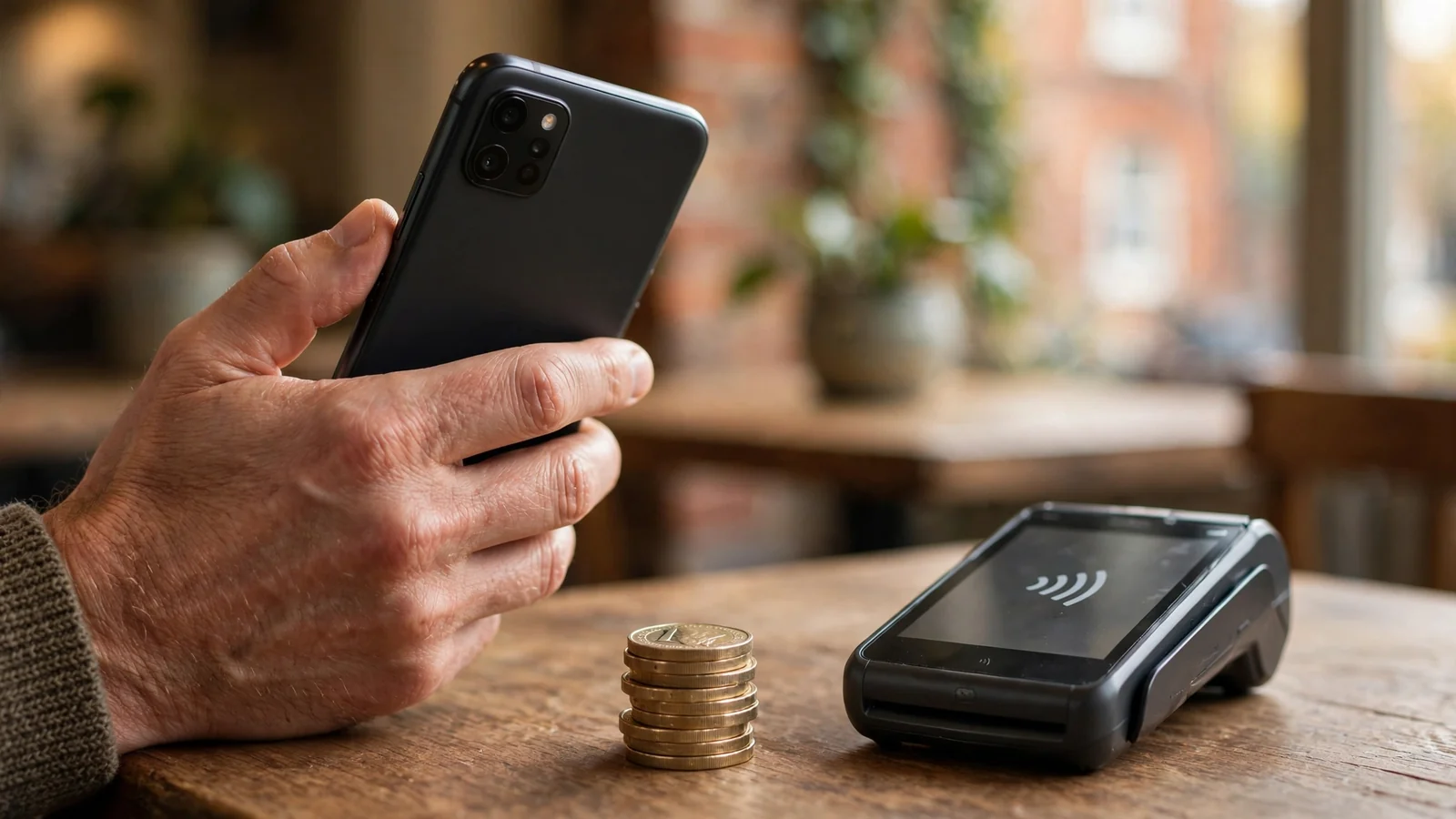
- Paying by Phone Is Not Paying by Credit Card
- Where the Deposit Appears: Phone Bill or Prepaid Balance
- Online Casino Deposits on a Mobile
- Finding Payforit in a Casino Cashier
- Mobile Slots and the Payment Route Behind Them
- The £30 Ceiling and Other Deposit Boundaries
- Boku, SMS Confirmation and Network Fees
- Bonuses, Verification and the First Deposit
- Pay-by-Phone Casinos and GamStop Claims
- Mobile Networks, Alternatives and Getting Winnings Out
Payforit charges a mobile account rather than a credit card, with deposits billed monthly or deducted from prepaid phone credit.
Paying by Phone Is Not Paying by Credit Card
“Pay by phone” can sound like a small variation on card payment. In a UK casino, however, it describes a different route: with Payforit, the deposit is charged to a monthly phone bill or deducted from Pay as you Go credit. The phone account is involved in the payment; a credit card is not the instrument being used.
That distinction matters because remote gambling rules in Great Britain draw a firm line around credit cards. UK Gambling Commission rules prevent licensed gambling operators from accepting credit-card payments for gambling. The restriction also applies when a payment is routed through a money service business. Changing the route does not make a credit-card-funded gambling payment acceptable.
Payforit is not a way to disguise a card transaction. Its charge is attached to the phone account, rather than submitted as a credit-card payment. That is why searches for casino pay by phone credit can lead to confusion: “phone credit” may mean prepaid mobile balance, while “credit card” means a borrowing facility. They are not interchangeable terms, even when both involve a payment being made now and accounted for later.
The distinction is not merely technical. A credit card offers a line of borrowing from a card issuer; Payforit places the charge on a mobile account or draws on prepaid credit. The payment may feel similarly removed from cash in hand, but the route and the rules governing it differ. Labels can blur the experience. They do not erase the boundary.
That boundary belongs to the UK’s wider approach to remote gambling. Operators serving customers in Great Britain must hold the relevant UK Gambling Commission licence, wherever the operator is based. The credit-card restriction is one part of the framework under which licensed operators handle gambling payments. It is not an invitation to search for a different name for a prohibited card transaction.
iPad Casinos in the UK: Browser Play Explained
A phone-bill casino, then, does not mean a casino can accept any payment associated with a phone. Nor does the phrase establish that a particular casino offers Payforit. Payment options are operator-specific, and the meaning of “pay by phone” should be read from the method actually shown in the casino’s cashier, rather than inferred from a headline or a general description. A method’s name is not proof of its availability.
This is also why pay-by-phone slots and pay-by-phone deposits are separate ideas. Slots played on a handset describe where the game is accessed; Payforit describes how money may be deposited. A casino can be playable on a mobile without offering phone-bill funding, just as the presence of a phone payment option does not describe which games are available. The screen is not the payment rail.
Nor does a phone-based deposit make an account anonymous. In Great Britain, an operator must verify a customer’s age before allowing a deposit, and legal online gambling is available only through operators holding a UKGC licence. A payment method cannot cancel those obligations. “No verification” is therefore not a sensible meaning to attach to pay by phone: the method concerns funding, not permission to bypass the account checks required of a licensed operator.
Payforit also has a clear limit in the other direction: it cannot be used to withdraw casino funds. A deposit route is not automatically a route for receiving a payout. That separation is easy to miss when payment descriptions compress the whole account journey into a few words. It remains important.
The practical definition is narrower than the phrase suggests. Pay by phone means a deposit charged through the phone account or prepaid balance when Payforit is offered; it does not mean paying a casino by credit card, and it does not make credit-card payments lawful by passing them through another service. In a regulated market, the method’s label is less important than the route the transaction actually takes.
A small distinction. A real boundary.
Monthly Contract
On a monthly contract, the amount is added to a future phone bill.
Pay As You Go
On pay as you go, the amount is taken from prepaid credit.
Where the Deposit Appears: Phone Bill or Prepaid Balance
A Payforit deposit does not arrive as a separate charge in the same place for every mobile customer. The key distinction is the phone plan: on a monthly contract, the amount is added to a future phone bill; on pay as you go, it is taken from prepaid credit. The casino receives a deposit, but the player later accounts for it through the mobile service already in use.
That difference can be easy to miss when the same payment option appears in a casino cashier. “Pay by phone” describes the route into the gambling account, not a single kind of mobile account or a universal billing arrangement. The charge follows the phone plan. A contract customer sees it alongside their later mobile charges; a pay-as-you-go customer sees less prepaid credit available.
On a monthly contract
With a contract phone, the Payforit amount is added to a bill that has yet to be issued. It is therefore not taken from a prepaid balance at the moment of deposit. The charge becomes part of the phone account’s future bill, which is paid under the customer’s existing arrangement with the network.
That can make the casino transaction feel less immediate than a debit from a bank account. The deposit may appear in the casino balance after the payment is confirmed, while its corresponding phone charge is settled later through the bill. The two events belong to different records: one at the casino, one with the mobile provider.
A monthly bill can contain several kinds of charges, so the Payforit entry may not be obvious from the casino’s account screen alone. The phone account is where the customer can check what has been added. The precise presentation of charges depends on the provider’s own billing information; the essential point is that a contract-based Payforit payment is billed rather than drawn from prepaid credit.
This arrangement has a small administrative oddity. The casino balance may be visible before the phone bill that records its cost has arrived. A payment can be real before it looks like a bill.
Instant Withdrawal Casinos in the UK: How Payouts Work
On pay as you go
A pay-as-you-go customer does not wait for a future monthly bill to settle the deposit. Payforit takes the amount from prepaid phone credit. The balance is reduced, leaving less credit for the customer’s other mobile use.
Here, the phone balance itself is the immediate constraint. If the required credit is not available, the intended charge cannot simply be placed on a later contract bill. The customer is using stored value already held on the mobile account, rather than adding another item to a bill that will be paid later.
This is why two people can choose the same casino payment method and experience different practical consequences. One has a future bill to review; the other has a prepaid balance that changes. Neither arrangement turns Payforit into a bank-card payment. It is the mobile account that carries the cost.
What happens during a deposit
The process begins in the casino cashier, where Payforit must be offered as an available method. After selecting it, the customer enters a mobile number. A confirmation code is sent by SMS; submitting that code confirms the transaction. The subsequent charge is then associated with the phone account according to its plan.
That sequence connects three things which are often treated as one: the casino’s deposit, the SMS confirmation, and the charge on the mobile account. The SMS is part of confirming the payment, not a statement showing how the phone provider will bill it. For a contract customer, the charge belongs on a future bill; for a pay-as-you-go customer, it comes out of prepaid credit.
A search for a casino that accepts payment through a mobile phone bill can therefore obscure the question that matters after confirmation: which phone account is being charged, and how does that account handle the cost? The phrase “phone bill” fits a monthly contract more literally than it fits pay as you go. In both cases, Payforit uses the mobile account, but only one produces a later bill.
Casinos That Accept Apple Pay in the UK: How to Verify
Nor does entering a mobile number and confirming a text message mean that the casino account has no other conditions. The payment step describes how the deposit is made; it does not establish that an account requires no checks. A mobile casino payment route should not be mistaken for an alternative identity system.
Provider names alone do not settle the billing question either. A customer using a particular network still needs to see whether Payforit is offered for that account in the live cashier and understand how the phone plan records such a charge. The name on the handset is not a substitute for the payment terms shown at the point of deposit.
In short, the deposit’s destination is the casino account, but its cost is collected through the mobile account: a future bill for a contract phone, prepaid credit for pay as you go. The distinction is modest on screen and rather less modest when the phone account is checked.
Online Casino Deposits on a Mobile
A phone can be the place where a casino account is opened, the screen on which a game is played, and the instrument used to fund the account. These roles can coincide, but they are not the same thing. A mobile casino deposit is not automatically a pay-by-phone deposit: the device may simply be displaying the casino’s ordinary cashier, with a debit card among the payment choices.
Payforit has a narrower part in that arrangement. It is generally intended for mobile players, making it a phone-centred route rather than a general payment option that can be assumed to work from any device. Its appeal lies in the connection between the account and the mobile setting. Its limitation lies there too: a person looking for a new pay-by-phone casino cannot infer support just from the fact that a site works on a phone.
That distinction is easy to miss because modern casino pages are designed to make the technology recede. A cashier appears inside the same small screen as the account, games and promotional panels. Yet a familiar interface says little about which payment routes are available to a particular account. The phone is the doorway; the cashier sets the terms of entry.
A mobile casino deposit is not automatically a pay-by-phone deposit; the device may simply be displaying the casino’s ordinary cashier with a debit card option.
For someone comparing an online casino pay-by-phone bill route with a card deposit, the practical difference is not that one is inherently more “mobile” than the other. A debit card can be used through a mobile cashier too. Payforit is the route more closely associated with paying through a mobile account, while a card remains a separate funding method. The choice depends on what the operator makes available and on the terms displayed for that account.
A specialist review describes debit-card deposits at UK casinos as free and more widely accepted than Payforit. That is a useful comparison, not a promise about every operator or every cashier. Payment arrangements can change, and a site’s mobile layout cannot establish whether a method is currently offered. The actual options shown at the point of deposit matter more than the general reputation of a payment type.
There is also a difference between convenience as a design idea and convenience as a transaction. A method may look well suited to a phone but still be absent from a particular casino’s payment menu. Another route may be available on the same screen, even if it does not charge the mobile account. The visible presence of Payforit, where offered, should therefore be understood as a specific cashier option, not as a quality automatically attached to every mobile casino.
Casinos That Accept Google Pay in the UK: What to Check
The language of “pay by phone” can blur these distinctions. It may suggest that the device itself pays, when in practice the payment route has its own conditions and must be selected separately. Searching for a casino with pay by phone is therefore a search for a funding option, not merely for a site that fits a phone screen. A mobile-friendly casino and a casino that accepts Payforit are overlapping categories, not interchangeable ones.
The comparison with debit cards also reveals something about the everyday architecture of online gambling. Cards are familiar across many kinds of online purchasing; Payforit belongs to a more specific relationship between a player, a phone and a participating operator. That makes it useful to some mobile players, but less universal by design. The small screen does not abolish the cashier’s distinctions. It only makes them easier to overlook.
A careful deposit decision begins with separating the device from the method. The casino may be opened on a phone, while the deposit is made by debit card; alternatively, Payforit may appear as a mobile-focused choice. Neither route should be assumed from the site’s appearance, and a card option should not be confused with payment through a phone account. The available choices are the ones the live cashier actually presents.
That is the central point for anyone comparing UK pay-by-phone casinos with mobile casinos that accept cards: “mobile” describes where the service is being used, while Payforit describes a particular way to fund it. One is a screen. The other is a payment route.
Do
- Inspect the live cashier for current availability
- Confirm the specific terms and fees for your account
- Verify the operator holds a UKGC licence
Don’t
- Assume a method is available based on old reviews
- Trust a homepage logo as a guarantee of current service
- Mistake a mobile-friendly site for a Payforit-enabled site
Finding Payforit in a Casino Cashier
A casino’s payment page is not a permanent catalogue. Operators can change which methods they support, and a route that appears in an older review may no longer be available when an account is opened. For anyone comparing casino sites that accept pay by phone, the useful evidence is the cashier shown by the operator at the time of deposit—not a general claim on a landing page.
Payforit has not vanished from the UK market. Specialist reviews report it among the payment options at Kwiff, NetBet, JackpotJoy and Virgin Games. That is a starting point, not a guarantee that every customer will see it. Availability can depend on the operator’s current arrangements and the options displayed for an account. The cashier is where the claim becomes concrete.
The distinction matters because payment pages often gather methods that do not work in the same way. A logo on a homepage may indicate a brand association, an older promotion or a service available only in particular circumstances. The deposit screen is more practical: it shows which routes are currently offered to that account and whether Payforit can be selected there. A casino that accepts pay by phone in one review is not necessarily a casino that will present Payforit to every visitor.
What to check before choosing a site
The live cashier should be inspected before a deposit is made. Its displayed terms are the place to confirm whether Payforit is available, along with the minimum deposit, maximum transaction value and any fee. The account’s financial-limit controls matter too: payment access does not replace the need to understand the limits set on the account.
Casinos That Accept Pay N Play in the UK
This is a more reliable way to assess online casino sites that accept pay-by-phone deposits than treating a list as definitive. A list can identify places worth checking, but it cannot establish what a particular cashier currently offers. The final screen should also make clear which method has been selected; a nearby card or e-wallet option is not evidence that Payforit is active.
There is a regulatory point behind that caution. A casino serving the British market for real-money play must hold a UKGC licence, regardless of where the operator is based. A payment option alone says nothing about the status of the site. Names appearing in a review should therefore be treated as leads to verify, not as a substitute for confirming the operator’s current UKGC licence and the live cashier.
Why reviews and cashiers can differ
Payment arrangements are operational details, not permanent features of a casino’s identity. An operator may revise the options it presents, while a review can remain online after those changes. Account-specific conditions can also affect what appears. That is why an old screenshot or a broad statement that a casino accepts Payforit may not settle whether the route is available now.
For people comparing casino sites that accept pay-by-phone deposits in the UK, the sensible order is therefore straightforward: establish that the operator is properly licensed for the British market, sign in or open the current cashier, and confirm the option and its terms there before proceeding. If Payforit is absent, another payment method shown in the same cashier may be available, but its own terms need checking separately. No method should be assumed from a review alone.
Important Distinction
Mobile play is not mobile billing.
The cashier is less glamorous than a ranked list, but it answers the question that matters at the moment of payment. Reviews can point towards Kwiff, NetBet, JackpotJoy or Virgin Games; the operator’s current payment screen determines whether Payforit is actually on offer. A small distinction. A consequential one.
Mobile Slots and the Payment Route Behind Them
A slot game does not acquire a payment method simply because it is played on a phone. The screen may be mobile-sized, the game may run in a browser or casino app, and the account may still be funded through a route that has nothing to do with the handset’s network. Mobile play and pay by phone are separate choices.
That distinction matters when looking for online slots that can be funded from a phone bill. The relevant question is not which slots are available on a mobile device, but whether the casino’s current cashier offers Payforit for that account. If it does, the route applies to the deposit; it does not mean that particular games are paid for individually by phone.
The same is true when a search is framed around a network such as Vodafone. A network name in a payment search does not establish that a casino supports Payforit on that network, or that the payment option appears for every account. Availability belongs to the operator’s live cashier, where payment routes are shown at the point of deposit. A casino’s mobile compatibility says nothing, by itself, about what that cashier will accept.
BNB Casino Comparison in the UK: BNB vs BCH
Payforit is generally intended for mobile players, which helps explain why the two ideas are often bundled together. Yet the phone is only the setting for the transaction; the cashier remains the decision point. A mobile slots page, a game catalogue, or a claim that a site works on a phone cannot substitute for checking the deposit options on the account.
Before depositing, the cashier is also where the practical conditions need to be checked: the minimum deposit, maximum transaction value, any fee, and the account’s financial-limit controls. These details can affect whether a chosen route is suitable, and they should be read before money is committed. A specialist review may describe a payment option, but a current cashier is the place to confirm what is available now.
The phrase “best pay-by-phone casino” can make the choice sound as though there is a fixed league table. In practice, a more useful distinction is whether a UK-licensed operator currently lists Payforit and whether its terms fit the account. The games may be the same whether they are opened on a phone or another device. The funding route is not.
Mobile play is not mobile billing.
The £30 Ceiling and Other Deposit Boundaries
The small entry point is part of Payforit’s appeal: a deposit can begin in the £3–£5 range, according to specialist reviews of the payment method. But a low minimum is not permission to keep adding funds without limit. The maximum matters just as much, and it shapes what this route can do at a casino.
Deposit Cap
The Phone-paid Services Authority caps Payforit deposits at £30 per transaction.
The Phone-paid Services Authority caps Payforit deposits at £30 per transaction. That ceiling applies to each payment, not to a suggested deposit target. It is a boundary built into the phone-paid system; a casino cannot turn the method into a larger single transaction simply by displaying a more generous cashier option. There is no useful trick in the distinction. The cap is the cap.
The casino’s own cashier still matters for the amount accepted in practice. Its minimum may be higher than the lowest figure found in specialist reviews, and the available options can vary by operator. Before placing a deposit, the displayed minimum and maximum should be checked alongside any account-level financial limits. A transaction that sits within Payforit’s ceiling can still fall outside the limits set for an individual account.
This is why a “£5 deposit” label describes only the starting point, not the whole price of using the payment route. At a pay-by-phone casino, the low threshold can make a small deposit possible, while the £30 ceiling prevents a single larger payment. Those two facts belong together. Mentioning only the minimum can make the method sound more flexible than it is.
Nor does choosing a pay-by-phone slot site change the payment boundary. The amount is governed by the deposit route and the cashier, not by the game selected after the account is funded. A small deposit may suit a tightly controlled session; it does not make repeated deposits a substitute for setting a financial limit. Small sums still add up.
Bitcoin Cash Casino Comparison in the UK, 2026
The useful figure, then, is not merely the minimum. It is the full range shown at the live cashier, read against the per-transaction cap and the account’s own controls. Payforit offers a narrow lane, not an open tab.
Boku, SMS Confirmation and Network Fees
Boku is a separate pay-by-phone route, not another name for Payforit. For a casino deposit, the payment begins in the cashier, where Boku must be available as an option. A player selects it and confirms the transaction by SMS; the funds do not move until that confirmation has been made. A slot game being played on a phone does not, by itself, mean Boku can be used to pay for it.
The distinction matters because payment routes are specific to each operator and account. A search for a Boku pay-by-phone casino may turn up old or general descriptions, but only the current cashier can show whether the method is supported for a particular deposit. If Boku is absent there, an SMS payment cannot be assumed to work in its place.
A specialist payment review describes Boku’s standard maximum as £30 per transaction. That is a ceiling, not a promise that every cashier will accept a deposit at that value; the operator’s displayed terms govern the available amount. There is no reason to treat repeated payments as a way around the cap.
Network Fees
Attention A mobile network may add a processing charge, which can affect whether a transaction succeeds.
The phone account also needs enough available credit to cover the deposit and any network fee. A mobile network may add a processing charge, and the amount can vary according to the network and tariff. A specialist review notes that this extra cost can affect whether a transaction succeeds. A balance that appears sufficient for the casino amount may therefore fall short once the network charge is included.
Boku’s confirmation step gives the payment a clear pause before funds are transferred. It also means that a request sent from the casino is not, on its own, proof of a completed deposit: the SMS confirmation is part of the process. The cashier’s terms and the network’s charges deserve attention before that confirmation is submitted.
For players comparing slot games that can be funded by phone, Boku is only one possible route. Some searches specifically seek pay-by-phone slots without Boku, but payment labels should not be mistaken for a guarantee that another carrier method is available. The live cashier decides.
Bonuses, Verification and the First Deposit
A pay-by-phone deposit does not turn a casino account into an anonymous one. The payment route identifies a transaction through a mobile number, but it does not replace the operator’s account checks. Identity verification may still be outstanding, and the payment method itself says nothing about whether an account is ready to withdraw winnings.
Promotions have their own boundaries. Specialist casino reviews report that Payforit deposits are commonly left out of welcome bonuses and other offers, but the terms attached to a particular account and promotion are decisive. A bonus advertised beside a cashier option is not necessarily available when that option funds the account. The distinction matters: a deposit may go through while contributing nothing to an offer, or an account may be subject to conditions the headline does not show.
“ No wagering” is not a description that can safely be inferred from paying by phone. Nor does a deposit route create a no-deposit bonus. Those are separate promotional terms, and their availability and conditions must be checked with the operator. The phone is a payment channel, not a shortcut through the small print.
Final Checks
- Confirm the operator is properly licensed (UKGC)
- Check the live cashier for Payforit availability
- Verify minimum and maximum deposit limits
- Check for any additional network fees
- Set personal financial limits on your account
Before a first deposit, a new remote customer must be prompted to consider setting a financial limit. Limit controls should remain accessible at account level afterwards, so the decision is not a one-off formality made at the threshold. This is part of the structure of licensed online gambling in Britain: payment and play sit inside an account with continuing controls.
Before money is added, the practical checks are broader than the bonus page. The account’s available payout route, any outstanding identity checks and the operator’s current terms all affect what happens later. A payment that succeeds does not settle those questions. Nor should a Payforit deposit be treated as proof that withdrawals can return by the same route.
The neat promise of “no verification” belongs to the language of advertising, not to a reliable account condition. Verification and financial limits remain separate from the choice to pay by phone. The distinction is less glamorous. It is the useful one.
Pay-by-Phone Casinos and GamStop Claims
A pay-by-phone casino described as “not on GamStop” combines two separate questions: how a deposit is funded, and whether an operator is connected to a self-exclusion scheme. The payment route cannot establish the answer to the second. A cashier offering Payforit says something about an available deposit method; it does not verify a casino’s GamStop status, its regulatory standing or whether it is suitable for a particular player.
That distinction matters because promotional labels can make “not covered” sound like a feature of phone billing itself. It is not. The phrase may refer to a claim about an operator, but without reliable confirmation it should not be treated as proof that the site sits outside GamStop, or that it offers a safe alternative. Payment branding is not a regulatory record.
For customers in Great Britain, the more basic boundary is the operator’s licence. Remote gambling businesses serving the British market must hold the relevant UK Gambling Commission licence, wherever those businesses are based. A site’s location abroad does not remove that requirement. Legal online casino gambling in the UK takes place at licensed and regulated sites; a claim about GamStop does not replace checking that status.
The funding rules remain separate, too. Licensed remote gambling operators in Great Britain cannot accept credit-card money for gambling. That prohibition also applies when a payment intermediary is used to route the funds. A phone-bill deposit should not be read as permission to move credit-card money into a gambling account by another path.
The wording “pay by phone casino not on GamStop UK” therefore leaves important matters unanswered. It does not show who operates the site, whether it holds a UKGC licence, or whether the claim about GamStop has been independently verified. Nor does the presence of a familiar payment option settle any of those questions. A method of payment is only a method of payment.
Mobile Networks, Alternatives and Getting Winnings Out
A mobile casino deposit and a mobile network are not the same thing as a route for getting winnings back. Payforit can put a deposit through a phone account, but it cannot send casino funds out again. That distinction matters whether the games are played on a phone or on another device: mobile slots with pay-by-phone funding still leave the payout question open.
Boku, e-wallets and Paysafecard are alternatives to Payforit, though their presence at a particular casino cannot be assumed. Specialist reviews also describe other payment options, but payment menus change; the live cashier is the useful record of what is available for an account. A network name in a search, including Virgin Mobile, is not proof that its customers can use a particular casino’s phone-payment route.
For withdrawals, UK-licensed casinos may offer routes such as a debit card, bank transfer, PayPal, Skrill or Neteller. That is a set of possibilities, not a promise that every route appears at every operator. Specialist reviews can help describe the landscape, but the cashier and the operator’s current terms determine the account-specific position. Withdrawal methods, charges, limits and processing arrangements can change.
Before a deposit, the payout route needs checking alongside any identity checks still outstanding and the casino’s terms. The chosen route must match the account holder’s details and currency. Some casinos outside the UK require a withdrawal to use the deposit method; where Payforit was used, another verified payment source may therefore be needed. A balance below an operator’s minimum withdrawal threshold may also prevent a request from being accepted.
Paying by phone is a narrow entrance, not an exit. The live cashier supplies the practical details: available withdrawal methods, their conditions and any limits or fees attached to them.