
 Available in GB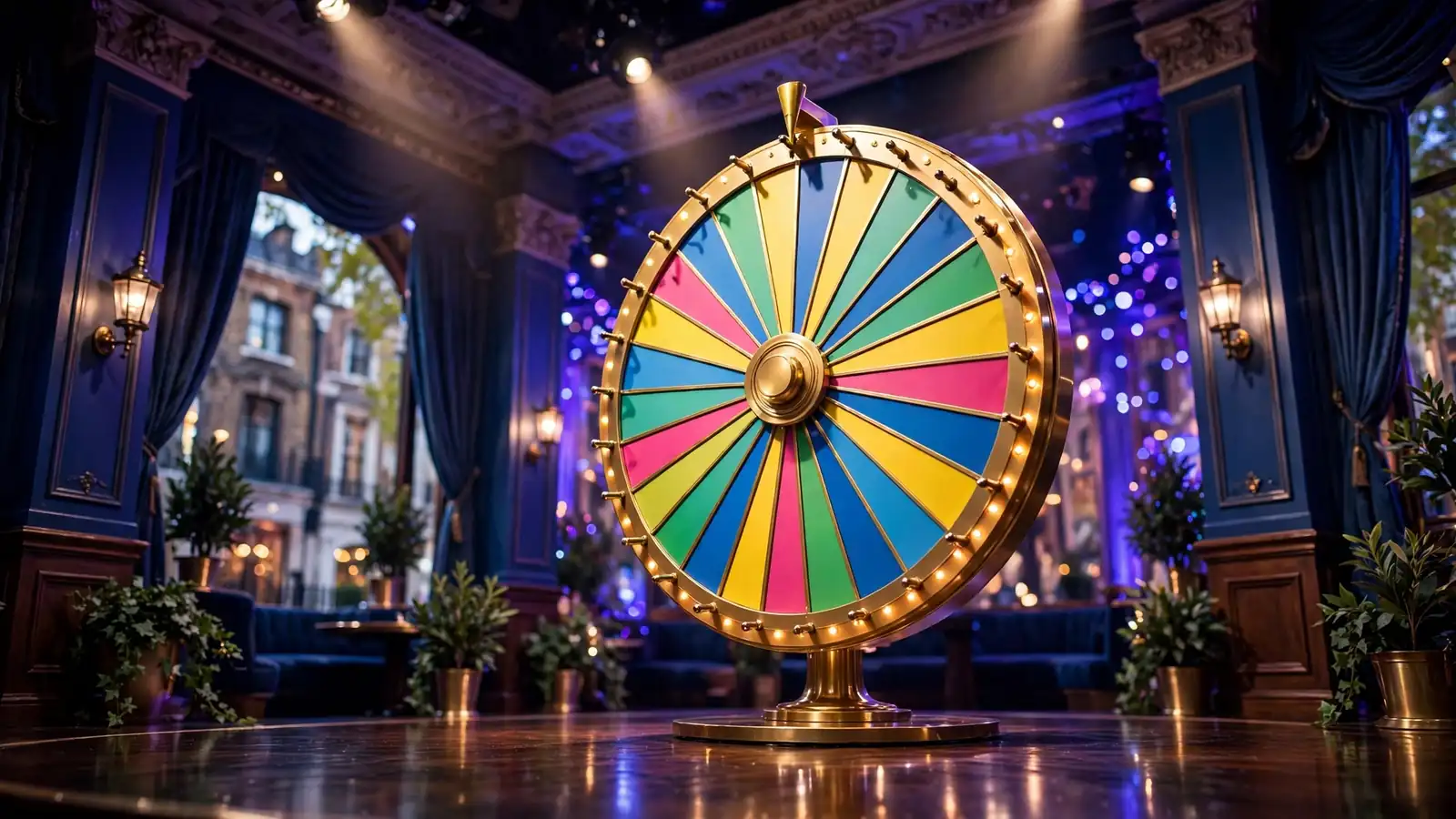
- Crazy Time Casinos in Britain: The Licence Comes First
- Finding Crazy Time Online
- What Makes a Crazy Time Casino Worth Considering?
- Where Crazy Time Sits in the Live-Casino Room
- Strategy Meets the Limits of the Game
- The Crazy Time Show: Game, Wheel and Casino Setting
- Free Play and Demo Versions: A Practice Session, Not a Deposit
- Bonuses, Deposits and the Rules Around Funding an Account
- Rules, Scores and the Limits of Slot Comparisons
A practical guide to UK licensing, finding the live game, demo play, account funding and the limits of strategy.
Crazy Time Casinos in Britain: The Licence Comes First
A casino offering Crazy Time is still a gambling operator before it is a place to find a particular game. In Britain, that distinction matters. A familiar name, polished presentation or recognisable live-casino title does not establish that the business may legally offer real-money gambling to people in Great Britain. The first question is therefore not what is on the screen, but who is responsible for making it available.
The UK Gambling Commission oversees gambling activity in the United Kingdom, including online casinos. For commercial gambling in Great Britain, it is the sole regulator. Remote operators that serve customers in Great Britain need the relevant Commission licence, even if the equipment running their service is located elsewhere. The rule follows the market being served, not the geography of a server room.
That point is easy to lose in the borderless language of the internet. A website may describe itself as British-facing, display familiar currency or offer games popular in the UK; none of those things amounts to regulatory permission. Nor does a company’s place of registration answer whether it holds the authorisation required to serve Great Britain. The licence is the material fact.
Check the operator, not just the game
Before an account is funded, the operator’s identity should be matched against the UK Gambling Commission’s public register. The licence number should be checked there, rather than accepted solely because it appears in a footer, advertisement or customer-service reply. A genuine number attached to a different business is not proof that the casino in question is authorised.
The names involved can be confusing. A casino brand may differ from the legal name of the business operating it, and a group may own several brands. The useful check is whether the entity responsible for the gambling service is covered by the appropriate operating permission. The Commission grants operating licences to businesses, while individuals who perform regulated roles in Great Britain may require personal licences. Those are distinct forms of authorisation, not interchangeable badges.
Online Casino Games for Real Cash in the UK
A careful check also means confirming that the register entry relates to the service being considered, rather than assuming that one licence held somewhere in a corporate group covers every website using its name. The register is not decorative legal furniture. It is the public record against which the claim can be tested.
This is particularly important when the offer is described as a Crazy Time casino. The title is a product; it does not certify the casino presenting it. The game’s availability cannot, by itself, tell a customer whether the operator has permission to accept wagers from Great Britain. Product and platform belong to different parts of the chain.
Why location does not settle the matter
Remote gambling makes physical location a poor guide to responsibility. The Commission’s reach over remote gambling offered to Great Britain consumers does not depend on where the key equipment sits. That approach recognises the practical reality of an online service: the customer encounters a casino through a website or app, while the machinery and business arrangements behind it may be spread across borders.
For a player, this makes the operator’s regulatory status more useful than the address of a studio, server or parent company. A casino may use equipment abroad and still need the appropriate British permission when it serves customers in Great Britain. Conversely, a local-sounding brand is not evidence of a licence. Geography can explain the business; it cannot replace the register.
The distinction also gives licensing a purpose beyond formal compliance. A regulated operator sits within a system of oversight, while an unlicensed service does not come under the Commission’s British regulatory framework. The point is not that every licensed business is identical in character or quality. It is that the legal threshold is a threshold, not a review score.
Before a first deposit
Age checks belong at the beginning of the process, not as an afterthought: operators must verify a customer’s age before allowing a deposit into a gambling account. A licensed casino must also provide responsible-gambling tools, including self-exclusion, and accessible controls for setting account limits. New customers must be prompted to set a financial limit before their first deposit. These protections are part of the operator’s obligations, not optional signs of good manners.
Before your first deposit
- Match the operator’s identity against the UK Gambling Commission’s public register
- Verify the licence number directly on the register
- Confirm the licence covers the specific gambling service being used
- Ensure age verification has been completed
- Set a financial limit before funding the account
The payment route matters too. UK-licensed casinos cannot accept credit cards for gambling, including credit-card funding routed through a money-service business; a wallet that lets credit-card funds be used for gambling cannot be used as a workaround. These rules are relevant when judging whether an account-opening process looks consistent with a regulated service.
A licensed operator must provide an internal complaints process and access to an approved Alternative Dispute Resolution service. That gives a complaint a defined route beyond an exchange with customer support. The presence of such procedures does not guarantee a preferred outcome, but their absence is a reason to pause and establish who is actually providing the service.
Licensing is not a promise of profit, a judgement on the entertainment value of Crazy Time, or a substitute for personal limits. It is the starting condition for a legal online casino serving Great Britain. The sensible order is plain: establish the operator’s identity, verify its licence on the Commission’s register, and only then consider whether to fund an account. Gambling should be limited to money that can be afforded to lose.
Finding Crazy Time Online
Finding Crazy Time online means finding it within a casino’s live offering, rather than downloading a separate game and expecting it to operate on its own. The casino provides the point of access; the game appears as part of its online environment. That distinction matters. A familiar title on a screen can feel like a small, self-contained entertainment, but real-money play still takes place through an operator’s account and under the rules governing that operator.
Deal or No Deal Casino UK: Slot Features Explained
The online setting removes the physical casino floor from the picture. There is no need to enter a venue or sit at a table: access is through a website or, where an operator provides one, an app. The experience is still presented as live casino entertainment, with a host and a production designed for viewing on a screen. The format may feel more like a programme than a conventional digital game, but its setting does not change the fact that wagering money is gambling.
That is where the British regulatory framework becomes important. The UK Gambling Commission oversees remote gambling offered to consumers in Great Britain even when the equipment running the service is located elsewhere. A server’s address, then, does not place a casino beyond the reach of the rules simply because the screen is being watched from Britain. Regulation follows the market being served, not merely the machinery behind it.
For a person looking for a Crazy Time online casino in the UK, the practical distinction is between a title being visible on a site and the site being entitled to offer real-money gambling to British customers. Those are separate matters. A page may display a game name or promotional image; that alone does not establish that the operator is within the British regulatory system. The setting can be polished. The legal position is less decorative.
Regulatory Reach
The UK Gambling Commission oversees gambling offered to Great Britain consumers, regardless of where the actual server or equipment is located.
Before a deposit, the operator’s licence number should be checked against the UK Gambling Commission’s public register. This is not a substitute for understanding the game or deciding whether it is suitable; it is a basic check on who is accepting the money. The Commission’s remit over remote gambling applies regardless of the location of key equipment, so a claim that a service is based abroad does not by itself settle whether it may lawfully serve consumers in Great Britain.
Online access also changes the rhythm of participation. A venue has a journey, opening hours and the small social friction of being seen entering. A website can be opened privately, at home, with far fewer visible boundaries between one session and the next. That convenience is part of the appeal of an online casino with Crazy Time, but it also makes personal limits more significant. The screen does not announce when enough is enough.
Account controls and responsible-gambling tools are part of the regulated environment, not mere accessories to the entertainment. Their presence does not make gambling harmless, and a live presentation does not make wagering a reliable way to earn money. The game remains a form of gambling whose outcome is uncertain. Any amount staked should be money that can be lost without affecting essential spending.
The British approach reflects a wider social choice: remote gambling is permitted, but commercial access is placed inside a licensing system. The live image may travel from a studio, and the equipment may sit elsewhere; the consumer remains within a market that has chosen to regulate the offer. Distance does not erase responsibility.
Crash casino games in the UK: a clear guide
Searching for a Crazy Time casino online can therefore lead to several kinds of pages: an operator’s game lobby, a promotional landing page, or information about the title. Only the first may provide direct play, and even then the operator’s status matters. The screen makes entry look simple. The rules sit behind it.
What Makes a Crazy Time Casino Worth Considering?
A casino can carry Crazy Time without being a thoughtful choice for the person playing it. The distinction lies less in the game’s name on a lobby tile than in the conditions surrounding it: how clearly the operator explains its services, what controls are available, and whether the experience remains intelligible after the first bright impression has passed.
“Best” is therefore a poor promise for a list of sites. A casino that suits one player’s habits may be wrong for another’s, and a polished lobby cannot establish value by itself. A more useful comparison asks what can be checked: whether account terms are clear, whether customer support and complaints routes are explained, and whether the controls for managing gambling are easy to find. These are ordinary administrative details, which is precisely why they matter. The show is the spectacle; the account is the machinery beneath it.
Before depositing, the operator’s licence number should be checked against the UK Gambling Commission’s public register. Age verification is required before an operator allows a customer to deposit. A site’s own claims are not a substitute for an independent register entry. Dull work. Necessary work.
DO
- Check the operator’s licence on the official public register
- Use responsible-gambling tools like self-exclusion
- Set financial limits before making a deposit
DON’T
- Rely on a licence number just because it is in a footer
- Assume a corporate group’s licence covers every brand
- Use credit cards for gambling transactions
The overall account experience deserves as much scrutiny as the game. UK-licensed casinos must provide responsible-gambling tools, including self-exclusion, and make account-level controls available. A new customer must be prompted to set a financial limit before the first deposit. These features should be findable without a tour through promotional pages. If they are hidden behind vague labels or difficult navigation, that is relevant information about the operator’s priorities.
Payment rules also shape the comparison. UK-licensed casinos cannot accept credit cards for gambling, and operators cannot take wallet payments where credit-card funds can be used for gambling. The point is not that a payment method makes one casino superior; it is that funding should happen within the safeguards of the regulated market. No account feature can make a deposit harmless. Gambling should be limited to money that can be afforded to lose.
The same care applies to Crazy Time casino bonuses. Promotional wording may make an offer sound like an uncomplicated addition to a balance, while its terms can define how it works and what a customer must do. A bonus should be assessed through its conditions, not its headline. It is not guaranteed value, and it does not turn a casino into a better fit. The details belong with funding decisions, not with the imagined promise of a more favourable game.
Casino results are another tempting basis for comparison. A recent run of outcomes may feel like a report card on a site, but it says nothing reliable about whether the operator is well run or whether its account safeguards are adequate. Nor does a list of past results establish what will happen in a later session. The casino’s quality and the game’s outcomes are different questions; confusing them gives chance a managerial authority it does not possess.
Casino Dice Games in the UK: Odds and Play
A considered choice, then, is less a hunt for a crowned winner than a small audit: clear terms, accessible controls, transparent complaint routes, and an account that can be managed without guesswork. UKGC licensees must offer an internal complaints process and access to an approved Alternative Dispute Resolution service, so those routes should be visible rather than discovered only after a problem. The practical standard is modest, but meaningful: the entertainment should not require the player to surrender clarity along with a stake.
Where Crazy Time Sits in the Live-Casino Room
A live-casino room is less a room than a way of arranging attention. Card tables place the familiar business of play in view; game-show titles add a host, a camera-facing set and the sense that something is being presented as well as played. Crazy Time belongs to that second kind of space. Its appeal is not simply that a casino game is available online, but that the experience is framed as a broadcast.
That distinction matters. A digital table can still feel like a table: players watch cards dealt and decisions made, with the dealer’s presence anchoring the action. A live game show asks for a different sort of attention. The host gives the proceedings a human centre, while the production turns each round into a small public event. The viewer is not only following an outcome; the viewer is watching it unfold in company, even when physically alone.
Digital Table Games
Players watch cards being dealt and decisions made with a dealer’s presence anchoring the action.
Live Game Shows
A hosted performance featuring a presenter and a studio set designed for viewing on a screen.
The format borrows from television without quite becoming television. A studio set, a presenter and the measured rhythm of a live broadcast make the game legible as entertainment, but the stakes remain those of gambling. That mixture helps explain why players look for Crazy Time in a live-casino section rather than among ordinary digital games. The wheel may be its most visible image, yet the larger distinction is the setting around it: a hosted performance rather than a silent interface.
There is a British history behind that setting. Grosvenor first introduced its live casino games in 2013, with card and casino offerings that included Blackjack, Texas Hold’em and Roulette. The detail is modest, but it marks a shift in how casino play was presented to customers: familiar table games were brought into a live online format, extending the casino’s social theatre beyond its physical premises. Crazy Time belongs to a later, more overtly show-led strand of that broader development.
The contrast between a traditional table and a studio game is not a contest in seriousness. Both arrange chance for an audience, and both depend on rules that make the outcome meaningful. The difference is in the performance surrounding them. A roulette table leans on ritual and concentration; a game-show presentation can lean on pace, spectacle and the host’s role in keeping the scene moving. Neither removes chance. One simply dresses it more visibly.
Mines Casino Game UK: Demos, Offers and Odds
For anyone seeking a place to play Crazy Time live, the useful distinction is between a casino that has a live-casino offering and one that specifically carries this title. The category alone does not establish that every game is available there. The live room is a broad department, not a promise about its catalogue. Availability can therefore be understood as a matter of the individual casino’s offering, without mistaking the general format for a listing.
This is also why a live casino can feel more social than a conventional game screen without becoming a shared physical venue. The host supplies a point of contact; the broadcast supplies a common moment. That is a designed atmosphere, not evidence that strangers are making decisions together. The room is virtual. The performance is real.
The attraction, then, sits between gambling and spectacle: a recognisable casino activity staged for an audience accustomed to live entertainment. The show can make the experience feel more companionable, but it does not make the financial risk theatrical. Only money that can be afforded to lose belongs in gambling. A bright set changes the lighting, not the consequence.
Strategy Meets the Limits of the Game
The phrase “Crazy Time strategy” can suggest that a hidden sequence, a carefully timed wager or a record of previous rounds might turn uncertainty into a dependable method. That promise deserves suspicion. A tracker can organise past results; it cannot, by recording them, establish what a later round will produce. History is a record, not a forecast.
Attention Past results and trackers are records of what has happened, not a forecast or a guarantee of future outcomes.
This is the old appeal of the ledger: once chance has been written down, it can look as though it has become orderly. A run of outcomes may invite a theory about what comes next, but a pattern in a record is not proof of a predictive advantage. Without reliable information about the game’s mechanics and probabilities, claims that a particular Crazy Time casino strategy improves the chance of success go beyond what can be responsibly stated.
Tracking can still have a modest, practical use. A player might use notes to see how long a session has lasted or how quickly funds have been spent. That is a way of observing personal behaviour, not a system for predicting the game. The distinction matters: a tracker can describe a session after it happens, while a strategy promising to beat the next result makes a much larger claim.
There is also a regulatory limit worth keeping separate from any game-specific tactics. A specialist review reports that online slot stakes in Great Britain are capped at £5 per game cycle for adults aged twenty-five and over, and £2 for those aged eighteen to twenty-four. That is a reported rule for online slots, not a universal limit for every live casino game. It should not be treated as proof that Crazy Time falls into that category; the product’s classification is a separate question.
Where an online game is classed as a slot, the limit constrains the amount at stake in each game cycle. It does not supply a strategy, make a result more predictable or turn a losing session into a recoverable one. Nor does a tracker change the permitted stake. Regulation can set boundaries around play; it cannot abolish chance.
Chicken Road Game in UK Casinos: What to Know
Other rules reinforce the difference between a recorded result and a freely accelerated session. Online slot autoplay is banned in Britain, and at least two and a half seconds must pass from the start of one slot game cycle before another can begin. Those requirements concern online slots. They should not be casually transferred to Crazy Time without establishing that the same classification applies.
A sensible approach to strategy is therefore narrower than the advertising language often suggests: set a personal spending boundary, keep track of time and expenditure if that helps, and do not interpret past outcomes as instructions for future wagers. Any tracker is an account of what has happened, not a map of what must happen. The house of chance keeps no diary on behalf of its guests.
Only gamble with money that can be afforded to lose. No system can make that warning obsolete.
The Crazy Time Show: Game, Wheel and Casino Setting
Crazy Time is presented as a live casino game show rather than as a conventional table game or a row of symbols on a screen. That distinction matters. Its identity is built around a televised style of presentation: a wheel provides the visual centre, while the casino interface places the event within a gambling setting. The result belongs to two familiar worlds at once—the staged energy of a studio show and the private, transactional space of online play.
The Live Show Format
The show format uses a televised style with a central wheel and a host to create a sense of occasion, though the underlying activity remains gambling.
The show format gives the game a different kind of attention. A table game often makes its rules and decisions the main spectacle; a game show can make the act of watching part of the experience. The presentation supplies a sense of occasion, while the wheel gives the eye a clear point of focus. None of that, by itself, tells a player what any particular result means or how a round is settled. The entertainment frame should not be mistaken for a substitute for the rules.
The word “live” describes the format’s connection to a live casino presentation, not a promise about a player’s chances or the pace of every session. Nor does it turn the game into a social gathering in the ordinary sense. The audience may be spread across separate screens, each person making decisions privately. A polished show can make that separation feel less obvious, but the underlying activity remains gambling.
That blend is part of the appeal of the live casino category. It borrows some visual language from broadcast entertainment—an on-screen host, a set, a camera’s attention—then places the result within an interface designed for wagering. The theatrical surface is real as presentation; it does not make the outcome a performance written for any one participant. The distinction is worth keeping in view.
A UK player encountering Crazy Time in a casino live area is therefore seeing a product shaped for viewing as well as participation. The title, wheel and show-like staging help it stand apart from quieter games, yet the basic decision remains personal: whether to take part, and what to risk. The surrounding production can create momentum. It cannot make a wager harmless, nor does excitement alter the financial consequences of a result.
Progressive Jackpot Slots: How They Work
There is also a useful cultural observation in the format. Casinos have long borrowed the rituals of leisure—tables, lights, hosts, ceremony—to make chance legible and inviting. The live game show updates that tradition for a screen, compressing a public spectacle into an individual account. The set may be shared; the financial exposure is not.
For anyone approaching Crazy Time for the first time, the sensible starting point is to recognise what the name promises and what it does not. It promises a show-shaped way to encounter a casino game. It does not, on its own, explain every rule, establish a strategy or guarantee an entertaining outcome. Those questions belong to the game information and the player’s own limits, not to the spectacle.
The distinction is plain. A show, and a wager. Only gamble with money that can be afforded to lose.
Free Play and Demo Versions: A Practice Session, Not a Deposit
A free or demo version of Crazy Time can make the format easier to approach: it offers a way to explore a game without treating each session as funded gambling. But availability depends on the casino and the way it presents the game. A demo should not be assumed to appear at every operator, and the absence of a free-play button does not mean a player has missed a hidden feature.
Demo Versions
A demo is a window to explore the presentation, not a promise of profit or a substitute for real-money rules.
The distinction matters because “free” can describe different things. A demo may let someone view or try a game without wagering real money. Free spins, by contrast, are promotional terms that may come with conditions and may not apply to a live casino game at all. The label alone cannot establish what is included. The casino’s own explanation should make clear whether the offer is a no-money demo, a promotion, or simply a way to watch the live presentation.
That difference is not pedantic. A practice session is a chance to become familiar with the interface and the pace of a show; it does not reproduce the financial decisions involved in real-money play. Nor does a demo establish that a player will have the same experience once funds are at stake. The money changes the room, even when the screen looks much the same.
What a demo can—and cannot—tell
A free session may help someone understand where the controls are, how the presentation unfolds and whether the format holds their attention. It can also answer a modest question that is often more useful than a grand strategy: is this the kind of casino entertainment they actually want to spend time with?
It cannot prove that a real-money session will be profitable, or that the game is a good choice for a particular budget. A demo carries no personal financial consequence, so it cannot show how a player will feel when a wager is lost or when the urge to continue takes hold. Practice is useful, but it is not a rehearsal for every pressure of gambling. A small distinction. A real one.
Classic Slots Online in the UK: Reels, Rules and Play
Casino reviews should be read with the same care. A review that mentions a free version may describe one operator’s current presentation, not a feature shared by every casino offering Crazy Time. Reviews can also use “free play” loosely, so the useful detail is what the casino actually allows: whether the game can be opened without a real-money wager, and whether any restrictions are attached. Claims about free spins deserve particular scrutiny rather than being treated as a standard part of the game.
Keep the boundary clear
Free play is not a substitute for checking what happens when an account is funded. In Britain, operators must verify a customer’s age before allowing a deposit, and remote gambling rules apply to real-money play. A demo does not remove those protections or turn an unlicensed real-money offer into a safe one. Nor should a free session be used as a reason to deposit simply because the next screen invites it.
Where play does move to real money, the governing rule is plain: gamble only what can be afforded to lose. That is not a claim about the game’s character; it is a boundary around the player’s finances. A free version can help someone decide whether the show appeals. It cannot make wagering harmless, and it should not be mistaken for evidence that a casino or promotion is suitable.
The most sensible use of a demo is therefore limited and unromantic: explore the presentation, note whether the format is enjoyable, then keep that experience separate from any decision to fund an account. Free play is a window, not a promise.
Funding Risks
Only gamble with money that can be afforded to lose. No promotion or bonus changes the inherent financial risk of wagering.
Bonuses, Deposits and the Rules Around Funding an Account
A Crazy Time casino bonus can sound like money set aside for the game, but the label alone says little about what can be done with it. A welcome offer, a deposit bonus and a no-deposit promotion are different arrangements; none should be treated as cash available for a withdrawal simply because it appears in an account. The relevant terms determine how an offer is credited, where it can be used and what conditions apply before any resulting balance can be paid out.
That distinction matters when looking for a Crazy Time bonus in the UK. A promotion may mention a live casino without establishing that it applies to Crazy Time, and a page advertising a no-deposit bonus does not by itself prove that the offer is available or unconditional. The same care applies to claims about Crazy Time payouts: promotional wording is not evidence of a particular return or a guaranteed payment.
Funding safeguards are less decorative. Operators must verify a customer’s age before allowing a deposit, and remote operators must prompt new customers to set a financial limit before their first deposit, with account-level limit controls accessible afterwards. Credit cards cannot be used to fund gambling, including through a money service business; a payment wallet that permits credit-card funds to be used for gambling is also barred. A deposit route is not acceptable merely because it has another name.
A casino described as “not on GamStop” deserves particular scrutiny. GAMSTOP is a self-exclusion programme, while UK-licensed casinos must provide self-exclusion tools. A label suggesting separation from GAMSTOP is not a sign of extra flexibility or a substitute for understanding who operates the site and what protections apply. For a bonus offer, the first question is not how generous its headline sounds, but what commitments and safeguards sit behind it.
Promotions can make the deposit feel like the beginning of a game. It is still money at risk. Only gamble what can be afforded to lose.
Rules, Scores and the Limits of Slot Comparisons
Searches for Crazy Time rules and scores often collapse two different questions: what happens within the game, and how gambling rules classify it. The distinction matters. A multiplier or score is part of a game’s own presentation; a statutory stake limit belongs to the rules governing a category of gambling. One cannot be inferred from the other.
Crazy Time is a live casino game show, but that description alone does not establish its scoring details. Multipliers, outcomes and the way a result is displayed should be checked in the game’s own rules, rather than reconstructed from a casino’s short promotional description. That is especially important when a page uses “score” loosely: it may refer to a result, a displayed multiplier or a player’s settlement, which are not necessarily interchangeable.
The legal comparison with slots also has a clear boundary. A specialist review states that Great Britain’s online slot stake limits do not apply to roulette or blackjack. Those limits should not therefore be carried across to every game found in a casino lobby. The classification of a particular product matters more than its visual style: a wheel, host and animated screen do not, by themselves, make a game a slot.
This is a narrow point, not a shortcut to judging whether a game is suitable. The rules supplied by the operator remain the place to confirm how a round works, what its displayed figures mean and how wagers are settled. A trusted casino should make those terms accessible rather than asking players to decode them from graphics.
The wider principle is modest: presentation is not regulation, and a multiplier is not a promise. Any gambling carries the possibility of loss; only wager what can be afforded to lose.
What are the online slot stake limits in Great Britain?
The maximum stake is £5 per game cycle for adults aged 25 and over, and £2 for adults aged 18 to 24. These limits do not apply to roulette or blackjack.
Are online casino games licensed and regulated?
Yes. The UK Gambling Commission regulates online gambling in Great Britain, and remote operators serving customers there need the relevant licence.
Is LuckyPays licensed by the UK Gambling Commission?
The Commission’s public register dated 26 September 2026 does not show an entry for LuckyPays or luckypays.io, so it is not listed there under that brand or domain.